Sealed vs single cards: which is better for Pokémon investing?
Booster boxes, Elite Trainer Boxes or chase cards bought as singles: two very different ways to invest in Pokémon. Pros, risks, time horizon and investor profile, with real examples from our price database.

Some links on this page are affiliate links: PikaRadar may earn a commission at no extra cost to you.
Two opposite investment logics
Sealed product and single cards answer different questions. Buying a booster box or an Elite Trainer Box is a bet on the scarcity of an entire product: every time a collector opens one, the global supply of unopened product shrinks. Buying a single card is a direct bet on value: you pay for the card everyone is chasing, without the lottery of opening packs.
Neither approach is better in absolute terms. The right choice depends on your budget, time horizon, storage space and how much time you want to spend following the market.
Sealed product: easy to understand, slow to mature
Sealed product appeals to many investors because the thesis is simple. A set is released, printed for a while, then disappears from shelves. Unopened boxes become scarcer over time. The most sought-after sets from the Sun & Moon and Sword & Shield eras illustrate this: at the time of writing, our database lists a Cosmic Eclipse booster box at around €3,944 and an Evolving Skies booster box at around €1,854 (Cardmarket prices, all EU languages).
Advantages of sealed:
- no need to judge the condition of individual cards;
- an unopened product keeps its full upside, since its contents remain unknown;
- demand comes from investors, collectors and content creators who open vintage product on camera.
Drawbacks:
- a long horizon: it often takes several years after a set stops printing to see real growth;
- reprint risk, which can stall a product for a long time;
- bulk and fragility: a dented box or damaged wrap sells for less;
- resealed, fake or weighed boxes, which means buying only from trusted sellers.
Not all sealed products are equal. Some exclusive formats trade well above retail from day one: the Pokémon Center Elite Trainer Box of the French 30th Anniversary Classic Collection sits around €408 in our database, versus about €120 for the standard version of the same box. Browse the sealed section to compare formats.
Single cards: targeting value directly
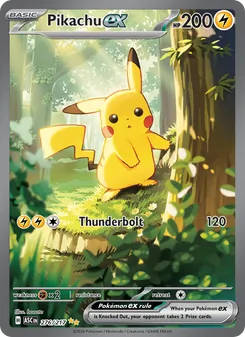
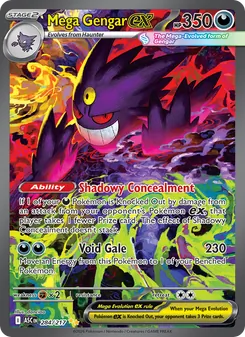
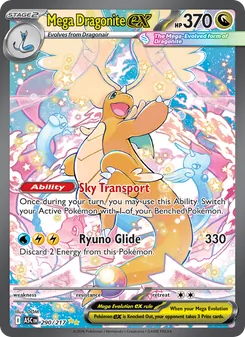
In a modern set, most of the value is concentrated in a handful of cards. Ascended Heroes is a good example: out of a total set value of about €3,310 in our English database, the Pikachu ex 276 Special Illustration Rare alone accounts for around €608, followed by Mega Gengar ex 284 at roughly €540. Buying these cards as singles means investing exactly where demand is.
Advantages of singles:
- you choose exactly what you buy, with no randomness;
- liquidity is often better: a chase card sells faster than an expensive booster box;
- storage is compact;
- a card in excellent condition can be graded to unlock more value, as explained in our guide to grading Pokémon cards.
Drawbacks:
- condition is everything: a flaw that is invisible in photos can be costly;
- card prices depend on hype around a Pokémon or an artist, which makes them more sensitive to trends;
- counterfeiters target precisely the most expensive cards.
Sealed vs singles at a glance
| Criterion | Sealed | Singles |
|---|---|---|
| Typical horizon | Long (several years) | Short to long depending on the card |
| Expertise needed | Product authenticity | Condition, authenticity, card selection |
| Liquidity | Average, lower on large formats | Good on chase cards |
| Storage | Bulky and sensitive to knocks | Compact |
| Main risk | Reprints, resealing | Hype cycles, condition, fakes |
| Possible lever | Growing scarcity over time | Grading |
Timing matters for both
Whichever route you choose, the entry price largely decides the outcome. For sealed product, the best window is usually while a set is still in print and available at or near retail. Once a product disappears from shelves, its price can climb quickly, and buying at that point means paying for growth that has already happened.
For singles, the pattern is often the reverse. Chase cards tend to be most expensive in the first weeks after release, when supply is thin and excitement is high. As more packs are opened, prices frequently settle before the long-term trend takes over. Patience at release is rarely punished.
In both cases, check the price history before buying rather than the latest sale alone. Our PikaRadar Index gives you the broader market direction, and each card or product page shows its own history. If the last 30 days look like a spike, waiting a few weeks is usually the safer move.
Which strategy suits which investor?
Sealed fits you if you have space, a horizon of five years or more, and prefer a low-maintenance strategy: buy at retail, store properly, forget about it. Buying at release, when prices are usually lowest, is the classic approach. Keep an eye on the release calendar and our deals.
Singles fit you if you enjoy analysing the market, can assess card condition and want better liquidity. They require more monitoring: check card prices and trends regularly.
Many investors combine both: a sealed base for the long run, plus a few carefully chosen chase cards, some of them destined for grading.
Protecting your investment
Whatever your strategy, storage is part of the investment. A booster box or an Elite Trainer Box belongs in a rigid protective case, away from light and humidity.
For singles, the rule is the same: sleeve, toploader or quality binder, and dry storage. If you are just starting out, read our complete beginner's guide to investing in Pokémon cards first.


