Grading Pokémon cards: PSA, CGC, PCA or Collect Aura?
PSA, CGC, PCA or Collect Aura: which company should grade your Pokémon cards? How grading works, what graders look at, resale value by company and the mistakes to avoid before you submit.

Some links on this page are affiliate links: PikaRadar may earn a commission at no extra cost to you.
What grading actually gives you
Grading means sending a card to an independent company that checks its authenticity, rates its condition on a scale (usually 1 to 10) and seals it in a tamper-evident case, the slab, with a label showing the grade and a certification number.
For an investor, grading has three benefits:
- trust: the buyer knows the card is genuine and knows its condition without judging it from photos;
- value: a card graded 10 often sells for much more than the same card raw, especially for sought-after cards;
- protection: the slab shields the card from handling and wear.
But grading costs money, takes time and never guarantees the grade you hope for. Before submitting, run the numbers with our grading calculator.
How cards are graded
All companies look at broadly the same criteria:
- Centering: how balanced the borders are, front and back. Often the most penalising flaw on modern cards.
- Corners: they must be sharp, with no whitening or softness.
- Edges: no white marks, chips or rough cuts.
- Surface: no scratches, fingerprints, visible print lines or dents.
A 10 requires a near-perfect card on all four criteria. A card pulled from a pack and sleeved immediately is not automatically a 10: factory flaws such as off-centering and print lines are common.
PSA: the resale market benchmark
PSA, an American company, is the oldest and best-known of the major graders. Its main strength is the depth of its secondary market: PSA slabs are bought all over the world, and recorded sales are plentiful, which makes valuing a graded card easier.
Its limits for collectors outside the US: shipping to the United States or through a partner service, postage and insurance costs, possible import duties on the way back to Europe, and turnaround times that vary a lot depending on the service level. Prices change regularly, so always check the official website before submitting.
CGC: a solid international alternative
CGC, also based in the US, comes from the comics world and has established itself in trading cards. It is recognised internationally, and its scale distinguishes a stricter "Pristine 10" above the "Gem Mint 10". CGC slabs generally sell for less than PSA slabs at the same grade, but the market is real and active.
CGC can be a good fit for mid-value cards, or for collectors who keep their cards rather than flip them.
PCA and Collect Aura: the French graders
PCA and Collect Aura are French grading companies. Their main appeal for European collectors is proximity: no transatlantic shipping, no customs, and turnaround times that are often more predictable.
The trade-off comes at resale: these slabs are mainly recognised by French and European buyers. For a high-potential card aimed at the international market, a PSA grade usually commands a bigger premium. For French-language cards of moderate value, or to secure a personal collection, these graders can offer good value for money.
The four companies compared
| Company | Based in | Resale recognition | Best used for |
|---|---|---|---|
| PSA | United States | Strongest, global market | High-potential cards, international resale |
| CGC | United States | Good, often below PSA at equal grade | Mid-value cards, long-term collection |
| PCA | France | Mostly France and Europe | French cards, simpler shipping from Europe |
| Collect Aura | France | Mostly France and Europe | French cards, personal collection |
Other companies exist, such as Beckett (BGS), but they are less common on the Pokémon market in France.
Choosing which cards to submit
Most cards are not worth grading. Fixed costs (grading fee, shipping, insurance, sometimes a middleman or import duties) do not depend on the card's value, so they wipe out any gain on cheap cards. A card is a good candidate when the gap between its raw price and its graded price stays large even at a 9, not just at a 10. Modern chase cards such as recent Special Illustration Rares are often good candidates because demand for 10s is strong.


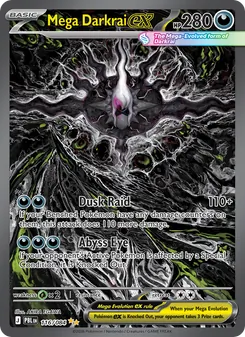
Our grading picks page ranks cards by the gap between raw and graded prices, which is a good starting point.
A simple rule of thumb: inspect the card honestly, estimate the grade you expect, then knock off one point. If the submission is still profitable at that lower grade once every fee is counted, including the selling fees you will pay later, go ahead. If it only works with a perfect 10, you are gambling rather than investing. Also factor in turnaround time: your money is tied up while the card is away, and a card at the top of a price spike may well be cheaper by the time the slab comes back.
Preparing and shipping your cards
- Select only cards whose condition justifies the cost. Inspect them under strong light with a loupe, front and back.
- Clean the surface gently with a clean microfibre cloth if needed, without any product.
- Protect each card in a fresh sleeve, then a semi-rigid holder or toploader, following the grader's instructions.
- Pack securely, with tracked shipping insured for the declared value.
- Keep photos and a detailed list before shipping, in case of a dispute.
Finally, double-check authenticity before you submit: a card rejected as fake costs fees and earns nothing. If you are new to the hobby, start with our beginner's guide to investing in Pokémon cards, and see our comparison of sealed vs single cards.


